 Panacea Bio Chem — Design Brief
DP · REP-01 · Custom Peptides · Jul 2026
Panacea Bio Chem — Design Brief
DP · REP-01 · Custom Peptides · Jul 2026
Panacea Bio Chem — Design Brief
DP · REP-01 · Custom Peptides · Jul 2026
Panacea Bio Chem — Design Brief
DP · REP-01 · Custom Peptides · Jul 2026
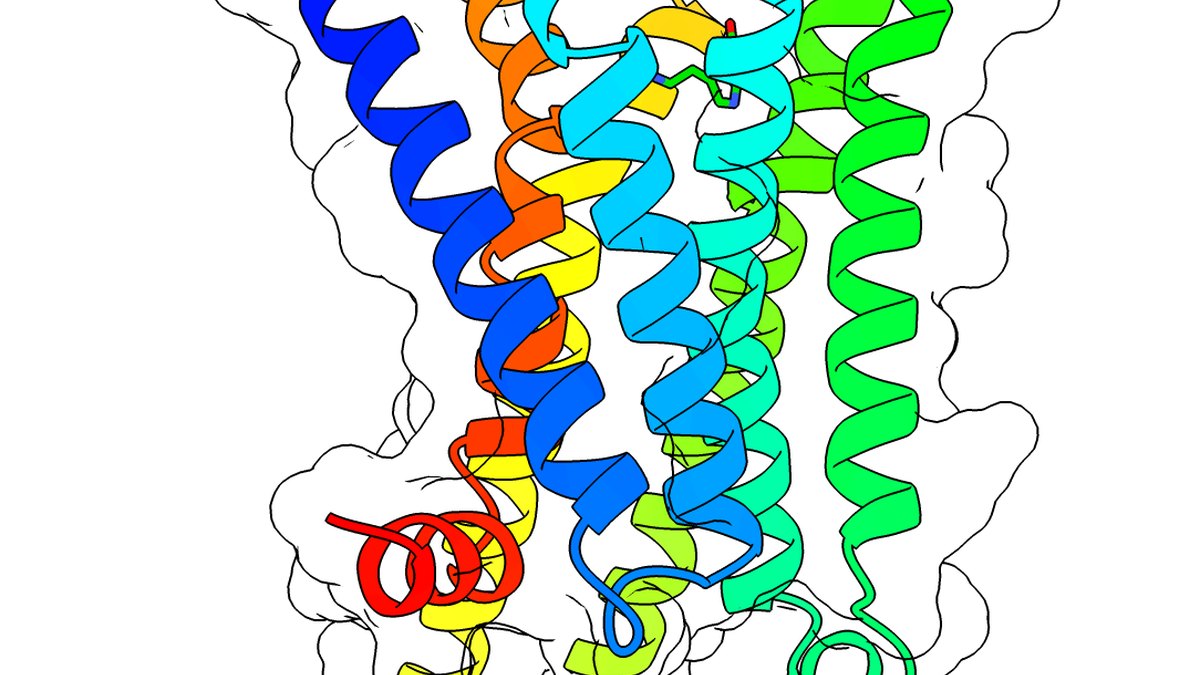
A designer — or custom — peptide is a short amino-acid chain whose sequence is specified by design rather than copied from nature. Because the sequence encodes the shape, and the shape encodes the function, choosing the residues is choosing what the molecule does. The chain is then built to order, one residue at a time, by solid-phase synthesis. This brief walks from what a designer peptide is, to how it is made and modified, to where Panacea Bio Chem — a specialist in custom peptide synthesis — does its work.
Start with the parts. A peptide is a chain of amino acids joined by peptide (amide) bonds — the same chemistry that builds proteins, only shorter, from a couple of residues up to roughly fifty. Each amino acid contributes one side chain, and the order of those side chains is the whole message: it decides how the chain folds, what it sticks to, and what it does.
A natural peptide — insulin, oxytocin, a venom toxin — is a sequence evolution arrived at. A designer peptide is one a person writes: the sequence is chosen on purpose to hit a target. Perhaps it should dock into a receptor like a key, or imitate a hormone, or self-assemble into a scaffold, or simply outlast the enzymes that would otherwise chew it up in minutes. "Custom" is the same idea seen from the bench — a chain made to a specification that did not exist before you asked for it. The design space is not small: a single ten-residue chain drawn only from the twenty canonical amino acids already has on the order of ten trillion possible sequences,1 and a designer can reach far beyond the canonical twenty into hundreds of unnatural building blocks.
“Designer peptide” gets used in three different senses, and they are not the same thing:
Nearly every custom peptide is assembled by Solid-Phase Peptide Synthesis (SPPS).2 The trick that makes it work is deceptively simple: anchor the growing chain to a tiny insoluble resin bead, then build outward from the fixed end. Because the chain is stuck to the bead, every excess reagent and by-product can be washed away between steps — no purification, no lost material at each junction. The chain is grown from its C-terminus toward the N-terminus, the reverse of how a ribosome works, repeating one short cycle for every residue:
The first, protected amino acid is fixed to the resin bead — the foundation the whole chain is built on.
A temporary cap on the chain's reactive end is removed. In Fmoc chemistry a mild base lifts it; the older Boc route uses acid.
The next activated amino acid is added, forming one new peptide bond; solvent washes away everything that did not react. Repeat 02–03 per residue.
When the sequence is complete, a cleavage step (typically TFA for Fmoc) frees the chain from the bead and strips the side-chain protecting groups.
Two chemistries dominate the deprotection choice — Fmoc (9-fluorenylmethoxycarbonyl, base-labile, now the workhorse) and the older, acid-labile Boc. Both rely on orthogonal protection: the temporary cap on the backbone comes off under one condition while the side-chain guards stay on until the very end, so the chain assembles in exactly the intended order. Because the cycle is identical every time, the whole thing can be handed to a machine — which is precisely what turned peptide-making from an art into an instrument.
A raw sequence is only the first draft. The real craft is in the modifications — the levers that turn a fragile, short-lived chain into something that holds its shape, reaches its target, and survives the body long enough to matter. The highlighted residues in the strip above are exactly these levers at work.
| Design lever | What it does | What it buys you |
|---|---|---|
| Cyclization | Joins the chain head-to-tail, side-chain-to-side-chain, or through a disulfide bridge | A rigid, defined shape — sharper target selectivity and resistance to proteases |
| D-amino acids | Swaps a natural residue for its mirror-image form | The body's chiral enzymes cannot cut it — a longer half-life |
| PEGylation | Attaches polyethylene-glycol chains | A larger hydrodynamic size, slower kidney clearance, an enzyme shield |
| Hydrocarbon staple | Cross-links two turns of an α-helix into a locked loop | A restored, stable helix that can slip into cells3 |
| Lipidation | Adds a fatty-acid tail that binds serum albumin | Days-long circulation — the basis of once-weekly analogues |
| N-methylation | Methylates backbone amide nitrogens | Better membrane permeability and protease resistance |
None of these is exotic in isolation; the artistry is in combining them so the gains add up without the chain losing the shape that made it useful in the first place.
The reason designer peptides are one of the fastest-moving corners of medicine is a single, hard frontier: getting the molecule to last. A peptide can bind its target beautifully in a test tube and still be near-useless in a body, because circulating enzymes and the kidney clear most native peptides within minutes. Everything in the toolkit above is aimed at that gap.
The clearest illustration is the incretin class. Native GLP-1, the gut hormone behind today's metabolic drugs, has a half-life of roughly two minutes. By re-engineering the sequence — swapping a residue the degrading enzyme recognises, adding a fatty-acid chain to borrow circulating albumin — designers stretched that same molecule into a once-weekly therapeutic. Same starting idea, a different set of design decisions, and a completely different clinical life. That is the leverage a peptide designer works with.
Panacea Bio Chem designs and researches custom, research-grade peptides. Rational sequence design and solid-phase synthesis are the front half of that work — choosing the residues, the modifications and the architecture that give a chain its job. But Panacea's particular focus is the part of the pipeline most of the field treats as an afterthought: the last mile, where a beautifully designed molecule has to leave the synthesiser and still arrive intact — folded, unoxidised, uncollapsed — in a vial months later.
That is where the wider Panacea network comes in, each technology aimed at one failure mode a designed peptide meets on its way to storage:
The science on this page is public. What is not public is how Panacea designs and finishes a given chain: the exact sequences, the modification choices, the synthesis and preservation parameters, and the hardware behind them remain a proprietary Panacea Bio Chem secret, held by Bogdan Dicoias and not disclosed. The outline is here; the recipe stays behind the door.
For the first half of the twentieth century, building a peptide was a punishing craft: every new amino acid meant a fresh round of reaction and purification, and yields bled away step after step. Then, around 1959, a young chemist at the Rockefeller Institute named Bruce Merrifield4 wrote a single line in his notebook that sounded almost naive — what if you could anchor the growing chain to a solid support, so you never had to isolate it between steps?
Colleagues were sceptical; the idea seemed too simple to matter. Merrifield built it anyway. He first made a short chain, then the hormone bradykinin, and by 1969, with Bernd Gutte, the enzyme ribonuclease A — a 124-residue protein assembled entirely on the bead. He even built a machine to run the repeating cycle automatically, the ancestor of every peptide synthesiser in use today. The idea that looked too simple to work earned him the 1984 Nobel Prize in Chemistry, on his own. Every custom designer peptide made since — including every one Panacea builds — is a descendant of that stubborn little bead.
Where does designing a peptide hit hardest? Reasoned from the mechanism, as inspiration rather than assertion:
What is a designer / custom peptide?
A short amino-acid chain whose sequence is
specified by design rather than extracted from nature — engineered so the chain does a defined
job (bind a receptor, mimic a signal, self-assemble, or resist the enzymes that would degrade
it) and then built to order by chemical synthesis.
How are custom peptides made?
By solid-phase peptide synthesis (SPPS),
invented by Bruce Merrifield in 1963: the chain is anchored to a resin bead and assembled one
residue at a time from the C-terminus, repeating a deprotect / couple / wash cycle — today
usually with Fmoc chemistry. Anchoring lets excess reagents wash away, which makes the process
repeatable and automatable.
What do modifications like cyclization or PEGylation do?
They are the levers that
tune behaviour. Cyclization and hydrocarbon staples lock a shape and resist proteases; D-amino
acids are mirror-image residues that chiral enzymes cannot cut; PEGylation and lipidation enlarge
the molecule and slow clearance. Together they can turn a peptide that lasts minutes into one
that lasts days.
Does Panacea Bio Chem design custom peptides?
Yes — Panacea designs and researches
custom, research-grade peptides, and develops the preservation methods (Cryolapse, TgShift,
RedoxVault, Peptourbillon) that keep a designed molecule intact from synthesiser to vial. The
exact sequences, parameters and hardware remain a proprietary Panacea Bio Chem secret.
What is oxytocin as a peptide?
Oxytocin is an endogenous cyclic peptide hormone involved in reproductive physiology and neural signalling. Its existence illustrates an important principle: a peptide’s function comes from its specific sequence, structure and receptor interactions, not from being a peptide in general. — sources: Nature Reviews Drug Discovery — Trends in peptide drug discovery, AAMC — 10 questions to ask your doctor about peptides
Is insulin a peptide?
Yes. Insulin is a peptide/protein hormone composed of amino-acid chains linked by disulfide bonds. It is also one of the foundational examples of peptide therapeutics, demonstrating that peptide medicines are not a new wellness trend but a long-established pharmaceutical class. — sources: Nature Reviews Drug Discovery — Trends in peptide drug discovery, AAMC — 10 questions to ask your doctor about peptides
What are peptide hormones?
Peptide hormones are signalling peptides secreted by cells or tissues that act on receptors to regulate physiology. Examples include insulin, glucagon and oxytocin. Their receptor specificity, processing and circulation differ widely, so the category describes a mode of biological signalling rather than one shared effect. — sources: Nature Reviews Drug Discovery — Trends in peptide drug discovery, AAMC — 10 questions to ask your doctor about peptides
Recent developments in the field — refreshed 2026-09-07 by Panacea Bio Chem.
The Panacea Technology Universe
Proprietary Panacea Bio Chem Ltd technologies, invented by Bogdan Dicoias — what each one does, and why it leads its class.
 Lyoprester®The only dual-chamber cartridge that is autoreconstitution-enabled, vacuum-sealed and argon-fillback.lyoprester.com ↗
 P-EARLs™Panacea-Engineered Aseptic Reconstitution Liquid(s) — each tuned to the peptide it wakes.p-earls.com ↗
 Peptourbillon™The layered peptide formulation architecture — single- or multi-layer, never a blend.peptourbillon.com ↗
 RF Tunnel™The RF-formed central channel through the cake.rftunnel.com ↗
 TgShift™Raises the cake’s glass-transition temperature with RF — instead of chilling below it.tgshift.com ↗
 Cryolapse™Cryogenic pressure collapse under S3Pulse™ control — vapour redistributed through the whole cake, not its surface, impeding crust formation.cryolapse.com ↗
 LyoLevit™The cake levitates and spins in high orbit — driven by ultrasound and RF.lyolevit.com ↗
 Lyochrysalis™The integrated chamber housing the whole drying stack.lyochrysalis.com ↗
 S3Pulse™The control brain for every piece of Panacea hardware.s3pulse.com ↗
 Liquiprester™The single-liquid cartridge engineered so multiple peptide APIs coexist in one shared vehicle.liquiprester.com ↗
 Syntheseract™Continuous-flow peptide synthesis in a special, very fast and economical way.syntheseract.com ↗
 CFSPPS™Continuous-flow solid-phase peptide synthesis, written as its own category.cfspps.com ↗
 OxyDeplete™Degassing plus no-headspace doctrine — the oxygen-starved seal.oxydeplete.com ↗
 ArgonLock™The final inert-atmosphere lock under argon.argonlock.com ↗
 RedoxVault™Separation, not merely suppression — redox isolation in lipid micro-reservoirs.redoxvault.com ↗
 PleniDose™The shared filling gantry — one machine filling both the dual-chamber Lyoprester and the liquid Liquiprester.plenidose.com ↗
 IncreSure™The dose-metrology layer — verified API per pen increment.incresure.com ↗
 ElimiVoid™Front-void elimination without touching the metered dose.elimivoid.com ↗
 Cryoviscous™The characterised cold, high-viscosity, low-mobility conditioning state.cryoviscous.com ↗
 Vana Machine™Vacuum Assisted Needle Accessory — vacuum conditioning and plunger-locking for the cartridge.
 EZnject™The disposable auto-injector pen built around the Lyoprester.panaceaeznject.com ↗
 Dicoias ΨThe computed-chemistry advisory — every substance reduced to a vector across physical, electronic and formulation space.dcppsi.com ↗
 SealoPrester™Aseptic Cartridge Closure System — Seal o’ Precision + Sterility.sealoprester.com ↗
 Peptidic LiquidThe peptide formulation in solution — the active plus its buffers, cryoprotectants, lyoprotectants and scaffolders.peptidicliquid.com ↗
 DiastolVAC™Biomimetic diastolic vacuum control — the pneumatic circulatory system of the machine: pumps, valves and sensors as one ensemble.diastolvac.com ↗
The publications indexed in PubMed in the last 30 days for "custom peptide synthesis" OR "rational peptide design" already appear in Trending above — the next most recent in the field, refreshed weekly.